
The early days of IEA-OES
 Building on an existing culture of collaboration IEA-OES was created at a time when ocean energy was still at an early stage of technological development, but international collaboration was not starting from zero. In Europe, a strong research community was already emerging around wave energy, supported by collaborative research programmes, thematic networks and regular opportunities to exchange results and experience. The European Wave Energy Conference series, which had begun in the 1990s, became an important meeting point for this community. The Fourth
European Wave Energy Conference, held in Aalborg in December 2000, only a few months before the establishment of IEA-OES, provides a clear example of researchers and developers from different countries coming together to discuss emerging technologies, testing, performance and the challenges of moving wave energy beyond the experimental stage.
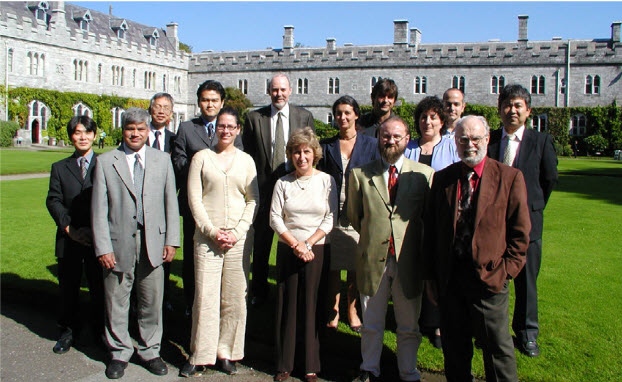
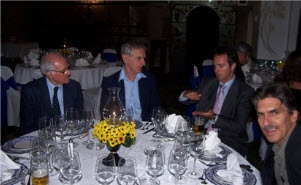 Top: 5th ExCo Meeting, Cork, Ireland, September 2003 Top: 5th ExCo Meeting, Cork, Ireland, September 2003Bottom: Social event during the 12th ExCo Meeting in Mexico City, 2007 |
This collaborative spirit was also reflected in European research initiatives. The European Thematic Network on Wave Energy, WaveNet, was established in 2000 and brought together research organisations and other actors from several European countries to pool knowledge on technical, economic, environmental and planning issues. Its work covered areas ranging from R&D and generic technologies to cooperation with the power industry, financing and the promotion of wave energy. Such initiatives show that, by the time IEA-OES was established, parts of the ocean energy community were already recognising the value of sharing knowledge and addressing common challenges collectively.
What IEA-OES added was a different and complementary dimension: a long-term intergovernmental framework through which countries could exchange knowledge at global level, align priorities and build continuity beyond individual research projects or conference cycles. It also broadened the scope beyond wave energy, creating a platform for cooperation across the different forms of ocean energy and linking technical development with policy, testing, environmental issues and market conditions.
What distinguished IEA-OES from the beginning was its international character. It was founded by three countries — Denmark, Portugal and the United Kingdom — on the principle that progress in ocean energy would depend on cooperation and shared learning rather than isolated national efforts. Through this common platform, participating countries began to build a shared understanding of technical priorities, environmental challenges, testing needs and the importance of comparable evaluation methods.
The first Executive Committee meeting took place at the IEA in Paris in March 2001, with representatives from the three countries that initiated OES and establishing the programme’s management structure and basis for collaborative planning. The international network soon began to expand. By 2003, Executive Committee meetings were already bringing together participants from Japan, the United States, Canada and the European Commission, alongside the founding members.
From the outset, this collaboration extended beyond Executive Committee meetings. Delegates and experts exchanged views, participated in international conferences and engaged with the wider ocean energy community. These interactions helped build relationships across countries and institutions, creating an international network through which experience could be shared, different perspectives compared and common challenges addressed collectively.
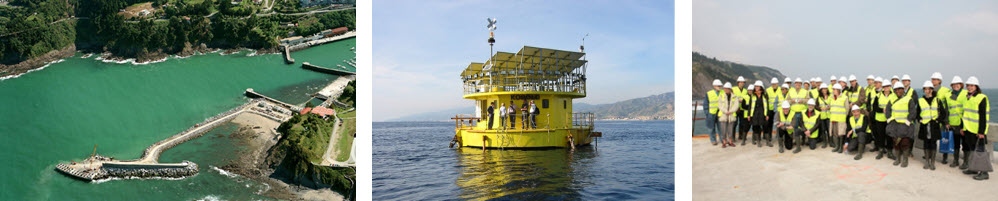
Technical visit to Kobold tidal turbine and Mutriku breakwater, during the ExCo Meetings in 2007 and 2009
Technical visits to real-sea projects were an important part of the early years of IEA-OES, giving delegates direct insight into emerging technologies, operational challenges and practical experience at sea.
[IMAGES]
Technical visits complemented the exchanges taking place in Executive Committee meetings, allowing delegates to connect discussion with direct operating experience.
Even in those early years, the ambition of IEA-OES was broad. The programme aimed to promote international collaboration across the major forms of ocean energy, including wave energy, tidal range,
tidal and ocean currents, ocean thermal energy conversion and salinity gradients. Its purpose was twofold: to support technology development while also strengthening the place of ocean energy within wider sustainable energy strategies. This broad ambition was reflected in the first Tasks launched by the Executive Committee:Task I focused on information exchange and dissemination, showing that communication and knowledge sharing were considered essential from the very beginning. Task II focused on developing recommended practices for testing ocean energy systems. It helped lay the foundations for more robust and transparent evaluation approaches, including work that would later inform frameworks
such as the Stage-Gate Metrics Framework, while also contributing to the broader move towards international standardisation through initiatives such as IEC TC 114.
[FIGURE: THE VISION OF OES]
Seen from today’s perspective, many of the questions being discussed 25 years ago were remarkably forward-looking, and several of them continue to shape the sector’s development. Issues such as survivability, long-term performance, testing, industrial integration and the pathway from research
to deployment remain highly relevant today.
The collaborative culture that defines IEA-OES was therefore present from the outset. Joint Task development, shared reporting and collective discussion of priorities reflected an early understanding that ocean energy would advance more effectively through international cooperation. This remains one of the programme’s defining strengths.
Leadership also played an important role in shaping this early direction. The first Chair, Dr Teresa Pontes, articulated a clear vision of the challenges ahead, highlighting the need to move ocean energy from research towards deployment and identifying survivability, long-term performance and industrial
integration as critical priorities for the future.
As the programme matured, IEA-OES also began to develop broader strategic perspectives for the sector. In 2011, John Huckerby authored the first International Vision for Ocean Energy, providing a shared reference point for future development. Later, under the leadership of Eoin Sweeney, IEA-OES contributed to the OECD work on The Ocean Economy in 2030, helping to position ocean energy within the broader context of the emerging blue economy.
Looking back, in the early years of IEA-OES, the sector was small, the challenges were significant and the route forward was far from clear. Yet the foundations established during those first years — international cooperation, shared learning, methodological rigour and strategic vision — have endured and continue to shape the role of IEA-OES today.