
Looking ahead: The decade of deployment
As IEA-OES marks 25 years of collaboration, ocean energy enters a new stage in its development. The sector is no longer defined only by early experimentation or isolated demonstrations. It now benefits from a stronger technical foundation, a growing body of operational evidence, more mature testing infrastructure, and a clearer understanding of the policy and market conditions needed for progress. The challenge ahead is to translate this foundation into wider deployment, stronger market confidence, and a more visible role for ocean energy within the global clean energy transition.
What the next decade requires
The coming years will require a shift in focus from proving concepts to enabling scale. This does not mean that research and innovation become less important; on the contrary, they remain essential. But innovation must now be increasingly linked to deployment pathways, industrialisation, and long-term system value. The sector will need to continue improving reliability, survivability and performance, while also reducing costs and demonstrating that ocean energy can operate as a practical and investable part of future energy systems.
This next stage will also require stronger enabling conditions. Technologies can only progress if markets, regulations, and (research) infrastructure evolve alongside them. This needs clear policy framework with investments from the public and private side. Clearer consenting pathways, suitable grid access, port and vessel availability, and more predictable support mechanisms will all be critical. At the same time, cross-sector integration is becoming increasingly important. Ocean energy is likely to grow not only as a source of electricity, but also as part of broader marine and coastal systems, linked to desalination, hydrogen, offshore aquaculture, microgrids, and hybrid renewable developments.
Strategic priorities
- In this context, three priorities stand out for the coming decade: The first is to accelerate commercialization, cost reduction and investability. This means supporting the transition from prototype and pilot projects to early arrays and repeat deployments, where learning can be consolidated and economies of scale can begin to emerge. If the sector is to move beyond dependence on technology developers and public funding alone, it must increasingly attract private investors. That will require stronger evidence of performance, clearer progress pathways, and greater confidence in the long-term business case.
- The second is to strengthen the place of ocean energy within national and regional energy strategies. For ocean energy to move beyond niche status, it must be recognised as a strategic option for decarbonisation, energy security and industrial development. This includes better integration in energy planning, climate strategies, blue economy agendas, and investment frameworks. It also means designing public support in ways that help create viable markets, including mechanisms such as Contracts for Difference, feed-in tariffs and other tools that can reduce risk and support early commercial deployment.
- The third is to deepen the integration of ocean energy within the wider blue economy ecosystem. The future of the sector will be shaped also by collaboration with ports, utilities, shipyards, offshore service providers, coastal authorities, island communities and other maritime industries. Building these connections will be essential to creating viable markets, stronger deployment ecosystems and broader industrial value.
The continuing mission of IEA-OES
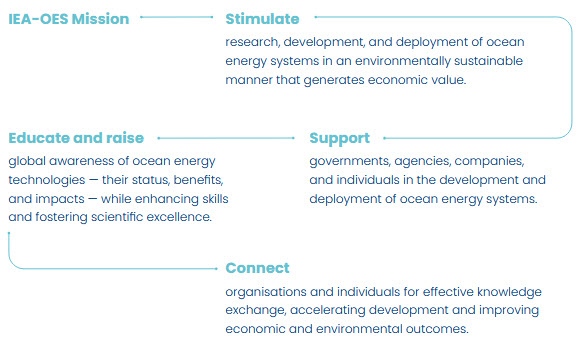
As the sector enters this new phase, the mission of IEA-OES remains as relevant as ever:
|
52 ExCo Meeting, Hangzhou, China, Technical Visit to
|
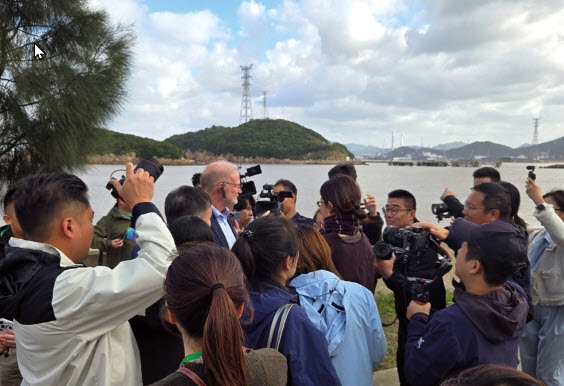
Building the future of ocean energy requires more than technological progress. It also depends on the ability to communicate evidence clearly, create dialogue across different communities and ensure that the sector remains visible in wider energy, industrial and policy discussions. IEA-OES contributes to this by engaging with policymakers, industry, academia, the media and the wider public, helping to translate technical developments into messages that are relevant to different audiences and decision-making contexts.
Workshops, technical meetings and joint discussions with researchers, technology developers, industry representatives and public-sector experts provide an important space for exchanging experience, identifying common challenges and exploring emerging priorities. These interactions help connect scientific knowledge with practical deployment needs, bring different perspectives into the work of IEA-OES and strengthen links across the wider innovation ecosystem. At the same time, engagement with journalists and other communication channels helps extend these discussions beyond the specialist community, raising awareness of ocean energy and supporting a broader understanding of its potential, progress and remaining challenges.
Together, these activities can help turn international knowledge and collaboration into the visibility, partnerships and informed decision-making needed to support the next decade of ocean energy deployment.
The human future of the sector
The future of ocean energy depends as much on people as on technology. Preparing a new generation of professionals is essential to the sector’s long-term development. INORE, the International Network on Offshore Renewable Energy, supports this transition by promoting collaboration, innovation and international exchange.
Through conferences, exchange programmes and joint projects, INORE gives early-career professionals the opportunity to work across disciplines and borders. Many of today’s leading scientists and developers in marine renewables first built international connections through this network. In this way, INORE reflects the same openness, cooperation and long-term vision that have helped define IEA-OES over the past quarter century.
But building the future of ocean energy will require more than inspiration alone. It will also require investment in education, training and skills. As the sector moves towards wider deployment, it will need engineers, technicians, environmental specialists, offshore operators, planners and policymakers with the expertise to support a more mature industry. Strengthening links between universities, research centres, industry and training providers will therefore be essential. Developing these skills is part of creating the long-term capacity, confidence and resilience that the sector will need in the years ahead.
As ocean energy enters its next chapter, this human dimension remains fundamental. Technologies will continue to evolve, but so too must the networks, leadership and knowledge base that sustain them. The future of ocean energy will be shaped also by the ability of people and institutions to work together across borders, sectors and generations.
Looking ahead, the opportunity is clear. Ocean energy has the potential to become a valuable part of a more diversified, resilient and sustainable global energy system. Realising that potential will require persistence, coordination and long-term commitment. The progress achieved over the past 25 years shows that this journey is already well underway.
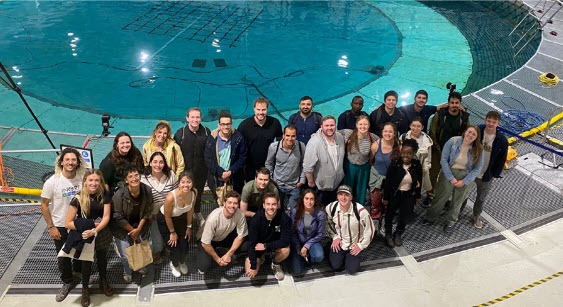
INORE at the FloWave Ocean Energy Research Facility, Edimburgh