
Reflections from Chairs
Over the past 25 years, IEA-OES has been shaped by the leadership of Chairs who helped guide the collaboration through different stages of the sector’s evolution. Their reflections offer a valuable perspective on the ambitions, challenges and achievements that have marked the OES journey.
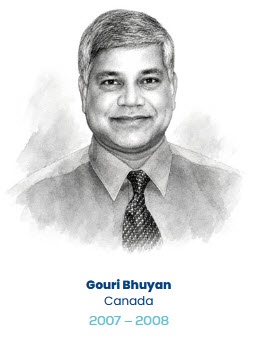
When you look back at your time as Chair, what defining moment stands out most?
“Attending the meeting of the Standardisation Management Board (SMB) of IEC in Geneva in June 2007, making a commitment that IEA OES would provide necessary input to their proposed ocean energy relevant standard making activities, and recommending the SMB to establish a relevant IEC Technical Committee” was the defining moment for me.
What do you believe was OES’s most important contribution to the global ocean energy community during your tenure?
Participation in relevant global events, workshops and meetings, including IEA events, and communicating
the IEA-OES strategies and the scope of ongoing tasks was the most important contribution to the global community.
What did chairing OES teach you personally?
“Lead by example, strategic thinking, and strength of collaborations at national and international level to achieve certain objectives” were my takeaways.
What message would you pass on to those who will lead the sector forward?
To focus on initiating and delivering relevant strategic tasks/projects having outputs that would be of value (and perhaps could influence) to the member countries’ policy makers working in the renewable energy energy security portfolios.
What should be OES’s top priority for the next decade?
Quantifying socio-economic-energy security opportunities (contributions) to the OES membe countries regions, in medium and longer terms, from the utilizations of all forms of relevant ocean renewable energy resources, including ocean thermal energy, through integrated energy-economics- dynamic modelling considering various uncertainties.
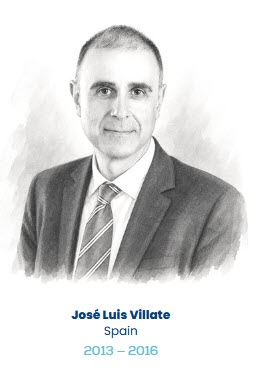
When you look back at your time as Chair, what defining moment stands out most?
I keep very good memories of all the ExCo meetings I chaired, always with a very active participation of all members, but I would highlight the approval of the OES term for 2017-2022. It confirmed that, despite slower progress than many had expected, member countries still believed in the long-term value of ocean energy and in OES as a committed international family working for its future.
What do you believe was OES’s most important contribution to the global ocean energy community during your tenure?
I believe OES’s most important contribution was to give the sector a credible international basis for decisions: work on cost of energy, the technology roadmap, the preparatory activity to stablish a performance metrics framework later on and reports on environmental and consenting issues. In a young sector, shared evidence and a common language is as important as individual deployments.
What did chairing OES teach you personally?
Chairing OES taught me that leadership is not only about setting priorities, but about listening, building consensus for decision making and keeping confidence alive in difficult times. It also confirmed how much a committed international team can achieve when it shares the same long-term mission.
What message would you pass on to those who will lead the sector forward?
My message is to remain ambitious, but honest about the challenges. The sector will need persistence, real-sea experience, cost reduction, industrial engagement and stable public policies. Above all, keep working together: ocean energy will advance faster if we share both successes and failures.
What should be OES’s top priority for the next decade?
I believe OES’s top priority should be to help turn today’s international vision into promote practical deployment. That means working with the aim of aligning market pull, technology push, infrastructure and regulation, while keeping environmental and social acceptance at the centre. The sector now needs not only reliable technologies, but investable projects
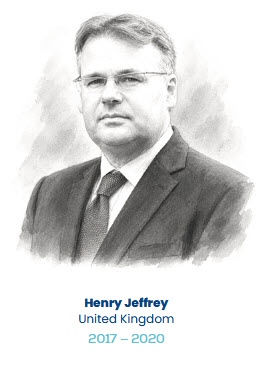 When you look back at your time as Chair, what defining moment stands out most?
I have worked in Ocean Energy sector for over 25 years and I’ve seen many rises and falls of both the technology progress and the political will that the sector has had to weather. A defining moment for me was the beginning of countries setting targets and ambitions for Ocean energy deployment — I am delighted that we are now very firmly in the position of accelerating from innovation to commercialization and ready to play our role in the worlds Net Zero goals.
What do you believe was OES’s most important contribution to the global ocean energy community during your tenure?
I believe OESs development of international stage gate metrics of ocean energy has had a significant contribution to sector progress. In short, it has ensured that that the sector funds only the best technologies and therefore accelerates its progress towards commercialisation. By using the stage gate process, OES has created and internationally accepted structure to enable this.
What did chairing OES teach you personally?
My biggest take away learning of my OES chairmanship was the important balance of collaboration and leadership skills required to ensure a collegiate and efficient working environment. In all of the OES meetings I led I was required to seek the most effective balance of challenging and influencing others and compromising where appropriate to ensure an evidence-based decision or policy was agreed upon.
What message would you pass on to those who will lead the sector forward?
AMBITION — Although this of course could be viewed as a technical sector. This is also a sector that is driven by people and their ambition. Ambition and disruption from businesses usual will required in all aspects of this sector from technology to policy to ensure it meets its full potential.
What should be OES’s top priority for the next decade?
PEOPLE — As we move forward with this sector, we will of course continue to require technology and innovation — but it is people that will drive this sector to full commercialisation. I fully believe that it is people — predominantly new young people — that are the future of this exciting sector and will accelerate it forward from innovation to be a meaningful part of the European and International Energy Mix, ensuring it is a solution in countries Net Zero and just transition targets around the world.
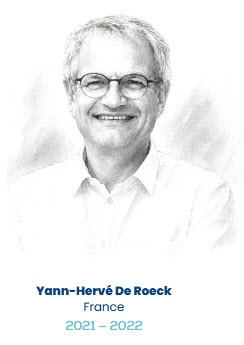 When you look back at your time as Chair, what defining moment stands out most?
My time as chair occurred during the pandemic, therefore it restricted a lot the occasions to meet in person. However, as co chair and then chair, I really enjoyed the annual OES meetings, where we could witness all the progress made by the member countries, and above, the brainstorming sessions where we came up with ways to ease and foster the endeavor of ocean energy. We ensure not to neglect any technology, for instance, we pushed hard to shed a positive light on OTEC.
What do you believe was OES’s most important contribution to the global ocean energy community during your tenure?
As a group, we encouraged the teams that had stewardship in refining the TRLs, designing criteria and thresholds to pass each step, agreeing on a performance matrix, finally publishing “An International Evaluation And Guidance Framework For Ocean Energy Technology”. This was made in conjunction with the US department of Energy and the European Commission, and can be considered as a significative achievement of the OES group. Such a document was long awaited by all stakeholders.
What did chairing OES teach you personally?
It was a great honor to chair this group, which I had joined around 10 years earlier. This meant that I got to know and become friends with many of the expert group members. OES is truly global, and it is possible to witness how people from different cultural backgrounds can work together smoothly. My term was short, as I had to leave the ocean energy sector less than two years after being elected. I then moved on to work in a global environment within the Argo programme of ocean in-situ observation, where international collaboration is key.
What message would you pass on to those who will lead the sector forward?
Patience and tenacity are required, since other energy production domains certainly evolve faster, but with less evidence of fundamental benefits such as true renewability and the lowest carbon footprint. Therefore, it seems that support for this or that type of energy comes and goes, but ocean energy systems are becoming steadily more efficient and reliable. While they may not offer tremendous financial returns, they remain one of the pillars of a long-term sustainable world.
What should be OES’s top priority for the next decade?
It was already clear that OES should work closely with other groups to share knowledge, combine efforts and benefit from synergy, but this is even more obvious today. This has always been the case when it comes to establishing environmental impact guidelines, assessing socio-economic impacts, network integration and energy storage at all timescales… The wind sector, and especially floating wind turbines, is one of these preferred allies!
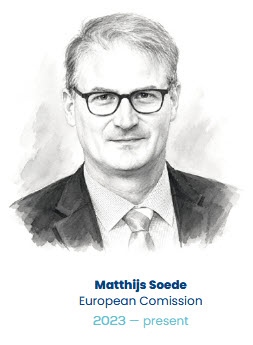 When you look back at your time as Chair, what defining moment stands out most?
A difficult question! Maybe the most defining moments for me as Chair are the moments that I hear at ICOE conferences the developers speaking about the progress they have been making with their devices and researchers speaking about their research work and what knowledge they have gained. As IEA-OES our aim is to facilitate ocean energy technology development and collaboration and it is motivating and inspiring to see the developers and researchers working so hard.
What do you believe was OES’s most important contribution to the global ocean energy community during your tenure?
During my tenure I think the International Roadmap ‘Ocean Energy and Net Zero’ which we developed in 2023 is a very important contribution. The roadmap shows clearly that even if we set ambitious targets, it is not just a matter of successful technology development and large demonstration projects, but that action will also be needed to create a market, to build infrastructure and create the right regulatory and legislative environment. As OES we are calling it now our MTIR framework: Market, Technology, Infrastructure and Regulatory environment. In my view this framework will be very important guidance for the whole ocean energy community for the next years.
What did chairing OES teach you personally?
It is important to listen and to be open to other opinions and ideas. For instance, with the development of the new workplan for 2027-2031 you have to consider what the interests are from all´OES members. In a larger meeting, not everybody will share their personal view directly and in general there is not sufficient time to discuss everything in detail. Together with the secretariat I organized bilateral meetings with all members and that was very fruitful.
What message would you pass on to those who will lead the sector forward?
Stimulate collaboration, communication and be persistent! There is still so much to be done in the sector and collaboration between government, research and industry is ultimately important. It is still a sector in development, so stay positive, look for the positive results and communicate them.
What should be OES’s top priority for the next decade?
Keep the OES International Vision and its MTIR framework as a guidance for the development of the OES workplan. We cannot neglect anything. It might be valuable to start thinking about what it would mean for each member country individually to build a large ocean energy project. Setting up a step-by-step plan for these projects and considering all possible and needed actions related to market pull, technology push, infrastructure and regulation.
From the early years of OES
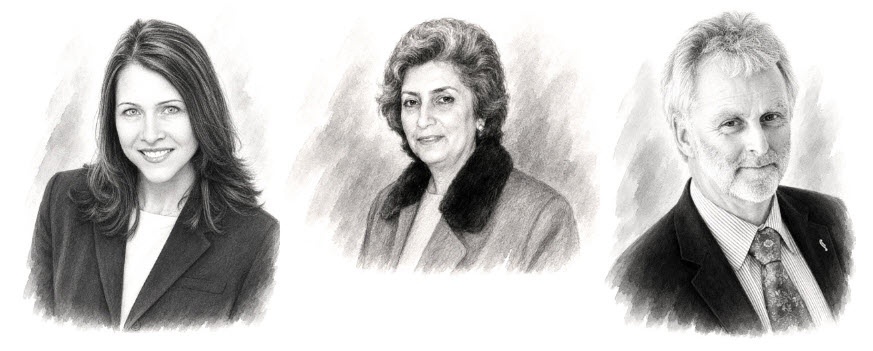
The early development of IEA-OES was shaped by the vision and commitment of those who guided the collaboration in its formative years. Their contribution helped establish the foundations of international cooperation in ocean energy and remains an important part of the organisation’s history and legacy.
In remembrance
Katrina Polaski, Ireland (2005–2006)
Teresa Pontes, Portugal (2001–2004)
John Huckerby, New Zealand (2009–2012)